Thursday, April 23, 2015

The Magic of Teaching


Today's #AprilBlogADay question was about how much transparency there should be in education. And I guess that my follow up question would be, "For whom?"

Students - My students are my team. I work with them every day. I want them to know why I'm doing what I'm doing, and I want them to know why I make the decisions that I do. When I share my reasoning and decision making, I'm modeling problem solving and leadership skills. I'm inviting them in to the process, and I'm bringing them on board. There are things we need to obscure from our students. When I want stir up student wonder, I may keep things close to the vest to drive their curiosity, but that's more about showmanship than about intentions. The only other things I feel I need to keep from my students are privacy based and safety based issues. Otherwise, I'm a fairly open book with my students.

Parents - Parents are in a different category. They don't get to spend nearly the time with me that their children do. They're not on my immediate team, but aside from my students, they are the largest stakeholders in our mission. On top of that, they're trusting me with their child's development, safety, and future on a daily basis. There is very little (aside from privacy issues) that I wouldn't be willing to share with, or explain to, my students' parents. Some of it comes home via email, some comes home via blogs, and chatting with their child, but it's generally fair game. If parents want more insight into what I'm doing, I'm available most easily by email, and then in person.

Teachers and Administrators - I love sharing. I want everybody to see what I do, and I relentlessly invite people in. They don't come as much as I ask, but I feel like we all do better by sharing. I don't plan well with others, but I share what I've got, and I'm good at stealing your good ideas when they work for me and my students.

Maybe it comes from liking Penn and Teller when I was young. I always thought that magic was cooler when you knew what they were doing, but it still seemed amazing. If I don't know how your illusion works, it's pretty cool, but if I do know, then I'm impressed by the artistry. I think that's how I approach my teaching.

To that end, if you're a teacher who's gonna be in northeast Florida, drop me a line. My students and I would love to have you visit.

Wednesday, April 22, 2015

5 Things We Need to Stop Pretending in Schools


1. We can get everything done in the time we're given.
If you add up the minutes for everything we're supposed to do each day, our students are going to need to start staying late. If you look at the amount of time textbook publishers say you should be spending on lessons, they're completely unrealistic.
We need to stop beating ourselves up over this. Find what works for you, and do it. If you can't find what works, settle on a schedule, and get as close to getting it to work as you can. Ask supportive friends for help and advice. We all feel inadequate sometimes. Find someone you trust, and learn from them.

2. A worksheet is adequate practice.
Before I say anything else, we know that for every rule, there are exceptions. I'm talking about the normal busy work type sheets. How often did anyone say, I did the most amazing worksheet today? Now to be fair to worksheets, there are times that they can be helpful for practice, but there are so many more engaging ways to practice. I'm not gonna list a bunch of things, I'm just going to say that worksheets are what I use when I'm tired, I have a sub that I don't know, or I'm stressed out and a little lazy.

3. "After all I've done for you..."
I've heard this phrase over the years. A teacher who has put forth an amazing effort for her students is angry to find that her students had no interest in what they were doing. They played, they messed it up, and they ruined her plans. And that's when she says it. "I worked so hard on this, and this is how you repay me?" Until we start asking our students what they want, until we start building student choice into our classrooms, we're not going to have super engaged students.

4. Everyone doing the same thing is going to work. Ever.
At the start of the year, my students' reading levels ranged from 2.5 to 5.8. Some of my kids could do most of the 3rd grade math curriculum, some would balk at a 2nd grade test. If I try to keep all of my students on the same story or the same math lesson, I'm doing a disservice to everybody. The 'ahead' kids are now bored, the 'behind' kids are sad and confused. One or more of those kids are gonna start disrupting things from either a benign or a malicious point of view, and now the 'middle' kids are distracted and off task. Differentiate, baby, and you reach more of them!

5. We can teach reading.
Reading is like running, cycling, weightlifting, or bowling. If you do it a lot, you'll get good at it. Run every day, at your pace, and what do ya know...you get faster. You can't spend a half hour a day talking about running and expect to get better. I don't think that you can talk your way into better reading either. Try targeted reading activities with small reading passages, and you're gonna kill reading. I've found that if I can get my students to read on their own level each day, their reading level 'magically' grows. My lowest students sometimes need coaching to help them understand reading strategies (athletes use coaching, too...), but you can use student friendly books and small groups to work on this!

OKAY, I LIED.
Here're two more.

6. Kids shouldn't know what level everyone's at, we have to protect them.
Too bad! They already do. Seriously, when we make leveled groupings, we give them polite names so no one is ashamed of their status. It doesn't matter what the names are. The kids know that the Cardinals are the smart kids, they know that the Robins are the dumb kids, and the Blue Jays are everyone else.
Or.... you could be honest with the kids. You could share that everyone is good at some stuff, and everyone stinks at something. You could let kids know who the experts are so they can get help. You can make groupings fluid based on achievement and understanding. Kids are sharper than we give them credit for.

7. There's an US/THEM dichotomy, aka teachers/students.
Students are the people that we spend the most time with each day. They are human beings. They are not some kind of other. If you treat them like coworkers for whom you happen to be a project manager, you're going to get better results out of them. You don't have firing power. But you do have this: What if you take the kid any teacher would want to fire, find who they really are, and get some results of her/him? You're gonna look like an amazing teacher. And to that kid, that's exactly who you are.

Tuesday, April 21, 2015

The Class of 2133


Today's #AprilBlogADay topic led off with this Mennonite Axiom: We must raise the next generation 100 years before it's born. So what does that mean for us as educators?

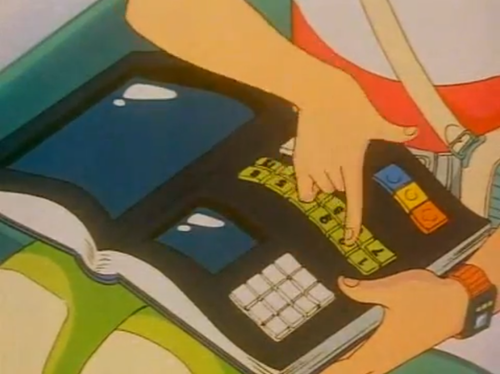
My students this year were born in 2005-2006. As I look out at my kids working on wireless laptops working on their blog posts, I think back to my childhood in the 80's. Watching Inspector Gadget, I thought Penny's computer book was totally cool, but I remember thinking that it was unrealistic, totally implausible.

Of course, now in 2015, not only does it look feasible, it looks a little primitive. But when you consider that that's a prediction that's 32 years old, it seems pretty on the nose! Even so, when you look at predictions of the future from 100 years ago, they got some of it right, but so much was different than what we're doing today.

The cool thing, and the kinda scary thing, is that when you look at the whole of human history, a switch got flipped somewhere in the nineteenth century, and growth got seriously exponential! This is, of course, my long winded way of getting to the idea that we have so little idea of what 2133 will really look like. We don't know what technology or job prospects will be. Where we do make predictions, many of them will likely be laughable.

The thing then, is to turn to essential, broad, human skills. When I was a kid, school meant sitting in rows and learning to follow orders. Getting a job at a factory was also a viable career choice. It sure isn't now. We need leaders, communicators, and problem solvers. We need to drive our culture into a direction that works collaboratively for the greatest net benefit.

We need to be explorers. We must seek out connections, inspiration, and solutions to new problems. We need to be creators. Problems are opportunities - by finding interesting and intriguing solutions - we can lead in large ways and small. And lastly, we need to be collaborators. We have to work together, and put divisiveness behind us.

Or maybe not...maybe we'll just have to learn to bow down to our robot overlords. "We took it too far!" we'll think, as we feed the machine.

Saturday, April 18, 2015

Doing the Right Thing is an Act of Leadership


In the United States, we are asked to do things in the name of education that may not always be what's best for kids. We test the heck out of kids, but to what end? We aren't handed standardized kids, so what do high stakes standardized tests do to us? If we use them as benchmarks to make sure we're progressing at an appropriate rate that's one thing. But when we tie school funding, teacher jobs, and student retention to tests, I think we're doing children a disservice. Distilling a child's year down to 320 minutes in April is not an accurate check of progress. And to the students who trip, fumble, or make any misstep on their tests, the emotional damage may be manageable, but it's not fair.

But what to do? I don't write the laws, and I feel like there's too much money in the testing game for it to go away quietly. So I take the most important step that I can take. And from my point of view, it's a small on. I tell my students, I teach them, I show them that they are more than a test. I give them opportunities to learn who they are and what matters to them. I help them find their voices, and teach them to share their truth. I encourage them to do their best on every test, but I tell them there isn't any test that can define whether or not they're a good person, or tell them that they're dumb. I tell them that the smartest student can do badly on any test, and that the struggling student can learn strategies to be just as (if not more) effective as anybody else.

These are small efforts on my part, but to my students, they are so important, and when I share my voice, my actions grow. I am a teacher, and that means it's my job to lead.

Thursday, April 16, 2015

The Power of My PLN


As a teacher, I always used to be the type of guy who got ideas from conferences, and trying to brainstorm how to get through the curriculum in the least boring way possible. When I wasn't at work, I wasn't thinking about education much, and other than begging to go to FETC each year, there wasn't a lot of interacting about teaching on my docket.

As I've said before, getting online changed so much for me. Reading so many good ideas from other teachers helped me re-frame my focus. Sharing my ideas helped me to learn which ones had power.

Growing my network expanded my conference. It broadened my thinking. I started taking more chances in favor of making my classroom into a place that I wanted to be, and that my students would want to be.

The opportunity to meet friends from my Twitter PLN led me to EdCamp Citrus last fall. Suddenly, I wanted to share ideas all the time. I invited coworkers to my classroom for lemonade, cookies, and a share session called Snack 'n' Share.

As the sharing grew, I made more and more connections - online, and at work. The ideas grew in my classroom. My students were blogging, MAKEing, Genius Hour-ing. We were Tweeting, Instagramming, sharing, sharing, sharing. We use hashtags in class like #YouMatter, #ClassJoy, #100ServiceActs. We've been Skyping with classrooms around the country. And it's been a phenomenal ride for my students and me.

There have been more EdCamps, Orange, Branford.... We're planning EdCamp St. Augustine. In May, I'm headed to EdCampUSA in Washington DC. And as all of this stuff is happening, opportunities and accolades have been snowballing. I don't know where it's all leading, but I'm doing some of the best teaching of my life, and I am so excited.

Wednesday, April 15, 2015

Twitterama


Like so many teachers who are active on Twitter, I used to think it was for something else. Most people I talk to thought it was a place for self serving celebrities. I liked reading jokes that comedians would throw out. It was like getting little tiny doses of standup for free each day.

Then, at FETC in Orlando, Florida last year, I found out that if I tweeted about things at the conference, I could win things.

Teachers love winning things. Our pay does not match well with our desire to provide cool opportunities for our students. Free is good, and we all want it when we're at conferences.

So I tweeted. And people responded. Weird. A favorite, a retweet, they're better than a like on Facebook, so ding, I tweeted more. I didn't want JUST ads for products to be in my history, so I tweeted things about FETC. More responses. I followed, people followed back.

And in that, I was suddenly realizing how much good there is in the teaching world of Twitter. It's almost like a its own thing. Later last year, I found out about all of the educational chats on Twitter, and I started joining in.

And my teaching world changed.

On a personal level, I grew so much from the reflecting and communication about my craft. My confidence in my ideas skyrocketed. When I thought something might be good to try, I had enthusiastic pals in my PLN (Professional Learning Network) with whom I was bouncing around the best ideas of my career.

Because of my connectedness online, I've made a classroom that has gotten me attention, praise, and a happy group of 3rd graders. I've had the backup I need to put more and more power into my students' hands. I've discovered one of the best ideas I've seen in my career, using Genius Hour (or Passion Time) to give students the power to take charge of their learning. And recently, through hashtags that have been introduced by pals like Rosy Burke, my students and I have been doing cool things like sharing our #classjoy and #100serviceacts. We're writing about how #YouMatter, we're taking time to #Read4Fun. We're Tweeting out student blogs and Instagramming pictures of fun things we're doing in class. We're Skyping with other classes.

On Twitter, I learned about EdCamp, a teaching phenomena that's growing and growing, I've made face to face connections with some amazing teachers, people like Tammy Neil from Branford, FL. I've attended EdCamp Citrus, Orange and Branford, and had some of the best professional development and educational conversations of my career. With some friends from my school, and help from Tammy, we're putting on EdCamp St. Augustine on May 9, and I'm headed to EdCamp USA on May 29.

I've made friends with the people behind the Superior Tech for Teachers Conference, and am planning to speak and present this June.

Tuesday, April 14, 2015

Why I Teach


I had no clue what I wanted to do with my life.

Well, I had a clue, but it was wrong. I liked math, I liked art, and I thought that architecture might be for me. As I hit some walls in my early years at Michigan State University, I decided against the path that I'd thought might be for me. I was gonna take a year off, but my dad said that if I stopped, I might never go back. He advised me to give his alma mater a try. I enrolled at Oakland University in Rochester, MI, with a big, "Huh?!?" in my mind.

It took me a little bit, but brainstorming my interests, I remembered that I'd always liked working with kids, as a teen. I visited with my friend Amanda's mom, Jane Schade, and spent some time in her class. That was it.

Blah blah blah, fast forward, cue the time shift sound effects. We're not looking at a life story here, let's get to the why.

That's the title, right? I don't think I really knew the why for ages. For more than ten years of my teaching, I never really understood it. I did it, I resented the pay, I liked the kids, I tried to keep my head down and have fun.

Over time, though, I'm starting to see the patterns in my life. I'm reflecting more. I'm paying attention. And here it is. I like novelty. I like potential. I like working to make cool things happen. As I type it, it's not the most heart-warming or lofty view, but that's what it is.

What if I take a group full of kids, kids who are "just normal." Some are bright, some struggle a bit, but we're talking eightteen average kids. What are they gonna do with their lives? Some will go to college, some to the military, some will peter out young, and some will have fairly successful lives. Statistically, a couple of them may do something remarkable, but they'll be regular, everyday people as they grow up.

But maybe, somewhere inside of each of them, there's a seed. And this seed, if you nurture it, it's the seed of greatness, or at least interesting. Maybe it's the seed of a big-hearted world changer. I teach because helping children nurture the magic seed inside will unlock a better future. Can I help to empower a group of people every year to be magnanimous and kind, to be innovative, to believe in themselves, and to take action to make the world around them a little more amazing? I know I can. It's what I do.

That's my why. What about you?